

Passing through Kigali International Airport on your way to another destination? Rwanda’s transit visa lets you leave the airport and explore the Land of a Thousand Hills during a long layover – all for just $30 and up to 72 hours.
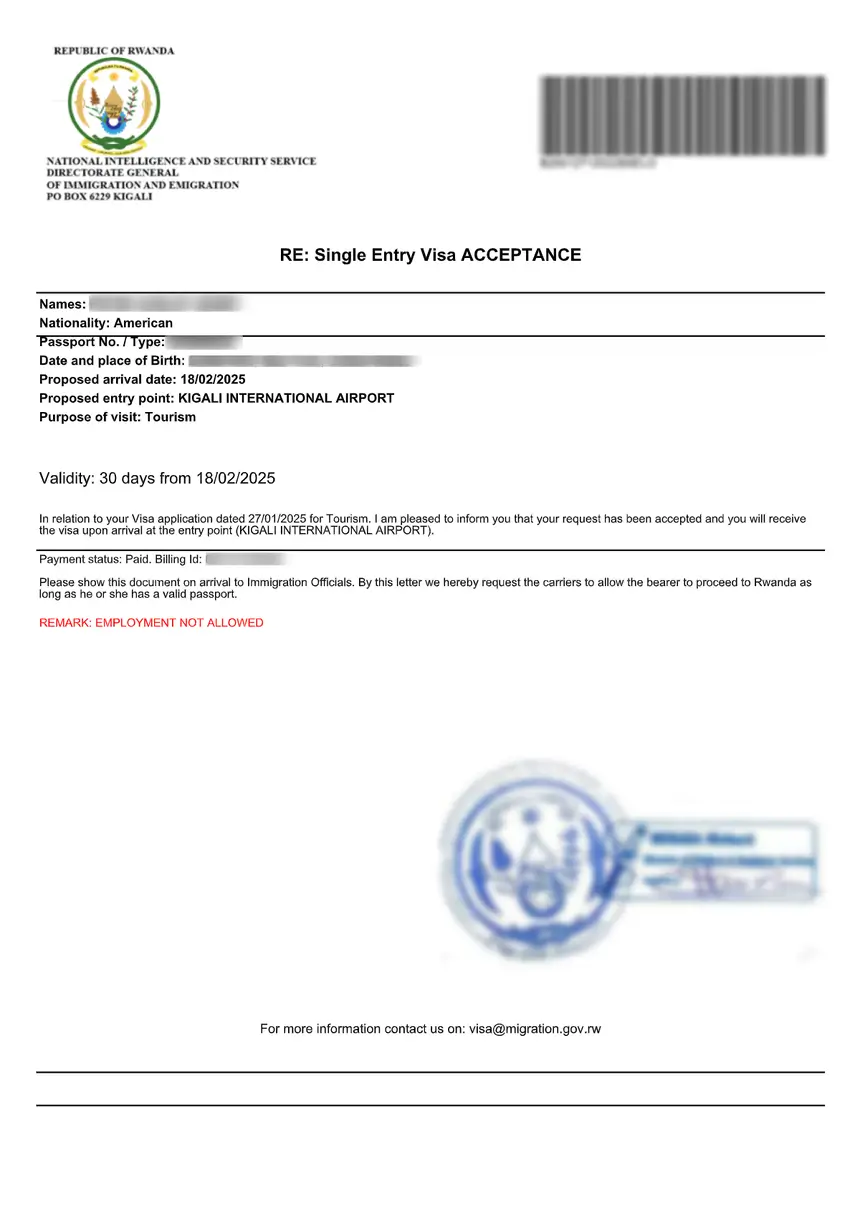
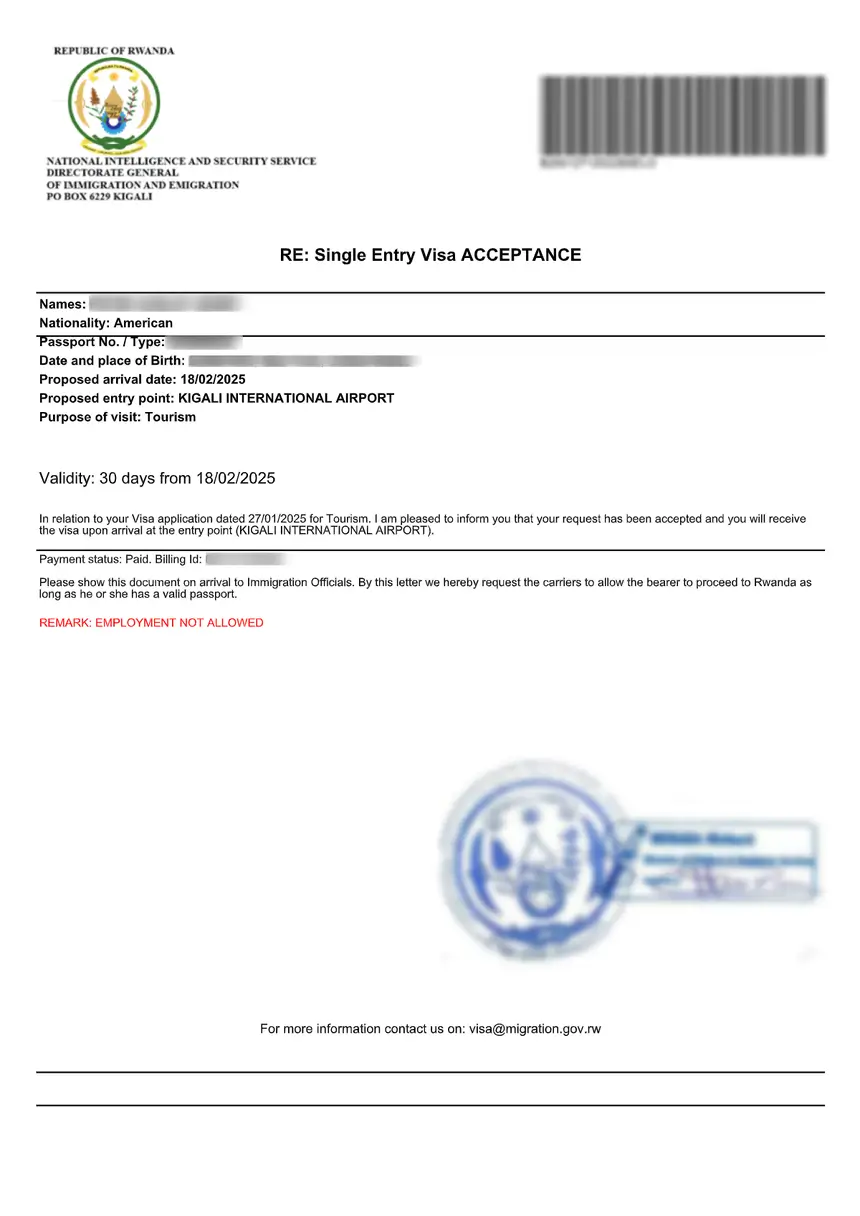
This guide covers everything you need to know about the Rwanda transit visa (also known as visa code VT or Q1), including who needs it, how to apply, and what you can and cannot do during your stay.
What Is the Rwanda Transit Visa?
The Rwanda transit visa is a short-term, single-entry visa issued to travelers who are passing through Rwanda en route to a third country. Unlike a tourist visa, it is specifically designed for layovers and brief stopovers.
Rwanda’s Directorate General of Immigration and Emigration (DGIE) issues two types of transit authorization:
| Code | Type | Fee | Validity | Entry |
|---|---|---|---|---|
| VT | Standard Transit Visa | $30 | 72 hours | Single |
| VE-2 | Emergency Transit (unforeseen circumstances) | Free | 72 hours | Single |
The VT transit visa is what most travelers will need. The VE-2 emergency transit visa is reserved for situations beyond your control – such as a canceled flight, bad weather, or an unexpected schedule change that strands you in Rwanda.
Who Needs a Transit Visa for Rwanda?
You need a Rwanda transit visa if both of the following apply:
- You are connecting through Rwanda to another country
- You want to leave the airport during your layover
If you are staying in the transit area of Kigali International Airport and your connecting flight departs within a few hours, you generally do not need a transit visa. However, if your layover exceeds the time you can comfortably spend in the airport, or if you want to step outside, you will need one.
Who Does NOT Need a Transit Visa?
Rwanda grants visa-free entry to citizens of several groups. If you qualify for visa-free arrival, you do not need a separate transit visa:
- EAC member states (Kenya, Uganda, Tanzania, Burundi, South Sudan, DR Congo) – visa-free for up to 6 months
- African Union, Commonwealth, and La Francophonie member states – free 30-day visa on arrival
- 90-day visa-free countries – Angola, Benin, Central African Republic, Chad, Cote d’Ivoire, Ghana, Guinea, Haiti, Indonesia, Jordan, Mauritius, Philippines, Qatar, Sao Tome and Principe, Senegal, Seychelles, Sierra Leone, Singapore, Saint Kitts and Nevis
- 30-day visa-free countries – Albania, Botswana, Cabo Verde, Comoros, Ecuador, Eritrea, Ethiopia, Gabon, India, Israel, Japan, Lesotho, Macau, Madagascar, Malawi, Malaysia, Mali, Mexico, Moldova, Mozambique, Namibia, New Zealand, Niger, Pakistan, South Africa, South Korea, Sri Lanka, Thailand, Turkey, Uzbekistan, Vietnam, Zambia
If your nationality falls into any of these categories, you can enter Rwanda without a transit visa and stay for the allowed period. Check our complete guide to Rwanda visa types for full details.
Rwanda Transit Visa Fee
The standard transit visa costs $30 USD. This is significantly less than the $50 tourist visa (V1) and is one of the most affordable transit visas in East Africa.
| Visa Type | Fee |
|---|---|
| Transit Visa (VT) | $30 |
| Emergency Transit (VE-2) | Free |
| Tourist Visa (V1) – 30 days | $50 |
| Tourist Visa (V1) – 90 days multiple | $70 |
| East Africa Tourist Visa (V11) | $100 |
The transit visa fee is payable online through IremboGov using MTN Mobile Money, Airtel Money, Visa, or Mastercard. You can also pay upon arrival at Kigali International Airport.
For a complete breakdown of all visa fees, see our Rwanda visa fee guide.
Transit Visa Requirements
To apply for a Rwanda transit visa, you need:
- Valid passport – must be valid for at least 6 months from your date of entry with at least one blank page
- Onward ticket – confirmed flight booking to a third country (not back to your origin)
- Visa for destination country – if your onward destination requires one, you must hold a valid visa
- Passport-size photo – taken against a white background, all facial features visible
- Proof of accommodation – hotel booking if you plan to leave the airport
- Proof of sufficient funds – evidence you can cover your stay
- Yellow fever certificate – mandatory if you are arriving from or have transited through a yellow fever risk country
All documents are uploaded digitally through the IremboGov portal. Accepted formats are PDF (max 500KB) for documents and JPG (max 500KB) for photos.
How to Apply for a Rwanda Transit Visa
You have three options for applying:
Option 1: Apply Online (Recommended)
- Visit the IremboGov visa portal
- Create an account or log in
- Select “Transit Visa” as your visa type
- Fill in your personal details and travel information
- Upload your passport scan, photo, and supporting documents
- Pay the $30 fee online (MTN Mobile Money, Airtel Money, Visa, or Mastercard)
- Submit your application
- Wait for approval (typically 4-8 business days)
- Download and print your e-Visa
For a detailed walkthrough, see our step-by-step guide to applying for a Rwanda eVisa.
Option 2: Visa on Arrival
You can apply for a transit visa at Kigali International Airport upon arrival. Bring all required documents and be prepared to pay the $30 fee. While convenient, this option may involve longer wait times at immigration.
Option 3: Rwandan Embassy or High Commission
If there is a Rwandan diplomatic mission in your country, you can apply in advance. Contact the DGIE at [email protected] or call +250-788-152-222 for guidance.
Can You Leave the Airport During Transit?
Yes. Unlike some countries that restrict transit visa holders to the airport, Rwanda’s transit visa allows you to exit the airport and explore the country during your 72-hour stay.
This means you can:
- Visit Kigali’s attractions (Genocide Memorial, local markets, restaurants)
- Take a day trip to nearby destinations
- Stay at a hotel in the city
- Experience Rwanda’s famous cleanliness and safety firsthand
However, there are important restrictions:
- No work permitted – you cannot engage in any employment
- No visa change – you cannot convert your transit visa to another visa type while in Rwanda
- No extension – the 72-hour limit is strict; overstaying can result in penalties or deportation
- Single entry only – once you leave Rwanda, the visa is void
Emergency Transit Visa (VE-2)
If your travel plans are disrupted by circumstances beyond your control while transiting through Rwanda, you may qualify for a free emergency transit visa. This applies to:
- Flight cancellations or schedule changes
- Bad weather preventing onward travel
- Medical emergencies
- Other valid reasons beyond your control
The VE-2 is issued at the entry point and is valid for up to 72 hours. It may be extended in exceptional circumstances. There is no fee.
Tips for a Smooth Rwanda Transit
Plan your layover time wisely. Kigali is a compact city – you can visit the Genocide Memorial, grab a meal, and return to the airport within 4-5 hours.
Get a local SIM card. MTN and Airtel SIM cards are available at the airport. Mobile data is affordable and widely available.
Currency. The Rwandan Franc (RWF) is the local currency, but USD is widely accepted. ATMs are available at the airport and throughout Kigali.
Transportation. Use official taxis or ride-hailing apps like Move (the Rwandan equivalent of Uber). Avoid unmarked vehicles.
Weather. Kigali has a mild climate year-round (average 20-27 degrees C), but carry a light rain jacket – showers can occur any time.
Safety. Kigali is one of the safest capital cities in Africa. However, keep valuables secure and stay aware of your surroundings.
Return to the airport early. Arrive at least 2-3 hours before your connecting flight. Immigration can have queues during peak hours.
Frequently Asked Questions
Do I need a transit visa for Rwanda if I am staying in the airport?
If you remain in the international transit area of Kigali International Airport and your connecting flight is within a reasonable time, you typically do not need a transit visa. However, if you want to leave the airport or your layover is very long, you will need one.
How much does a Rwanda transit visa cost?
The standard transit visa (VT) costs $30 USD. The emergency transit visa (VE-2) for unforeseen circumstances is free. Citizens of African Union, Commonwealth, and La Francophonie countries may enter visa-free for up to 30 days.
How long is the transit visa valid?
The Rwanda transit visa is valid for 72 hours (3 days) from the date of entry. It cannot be extended or converted to another visa type.
Can I apply for a transit visa on arrival?
Yes. Rwanda offers visa on arrival at Kigali International Airport and all land border posts. However, applying online through IremboGov is recommended to avoid delays at immigration.
Do Indian citizens need a transit visa for Rwanda?
India is a Commonwealth member state, so Indian citizens receive a free 30-day visa on arrival in Rwanda. You do not need a separate transit visa. See our [Rwanda visa guide for Indian citizens](/rwanda-visa-indian-citizens) for more details.
Do US citizens need a transit visa for Rwanda?
US citizens can obtain a visa on arrival in Rwanda. For transit purposes, you can get a standard visa at the airport. The US-specific V12 reciprocity visa ($160, up to 10 years) is only available through the Embassy in Washington D.C. Read our [Rwanda visa guide for US citizens](/rwanda-visa-us-citizens).
Do UK citizens need a transit visa for Rwanda?
As a Commonwealth country, UK citizens get a free 30-day visa on arrival in Rwanda. No transit visa is needed. See our [Rwanda visa guide for UK citizens](/rwanda-visa-uk-citizens).
Can I visit tourist attractions on a transit visa?
Yes. The transit visa allows you to leave the airport and explore Rwanda as long as your total stay does not exceed 72 hours. Popular options include the Kigali Genocide Memorial, local markets, and day trips to nearby parks.
What happens if I overstay my transit visa?
Overstaying a transit visa in Rwanda can result in fines, detention, or deportation. It may also affect future visa applications. Always plan to depart within the 72-hour validity period.
Do I need a yellow fever certificate for transit?
If you are arriving from or have transited through a country with a risk of yellow fever transmission, you must present a valid yellow fever vaccination certificate. This applies to transit passengers as well. Check the [WHO yellow fever risk countries](https://www.who.int/publications/m/item/vaccination-requirements-and-recommendations-for-international-travellers-and-malaria-situation-per-country—2024-edition) list for your itinerary.